
Let flowers bloom! Bee-friendly seed bombs made at home
Do you also long for the scent of flowers and the hum of bees? Seas of flowers are not only pleasing to the eye. They bring many benefits, as they attract bees and bumblebees. Even if you don’t have your own garden, you can do something to improve floral diversity on urban areas. The magic word is bee-friendly seed bombs. You can easily make bee-friendly seed bombs yourself. It’s extra fun with children. The seed balls made with love and respect for the native plant world also make a wonderful gift.
What are bee-friendly seed bombs?
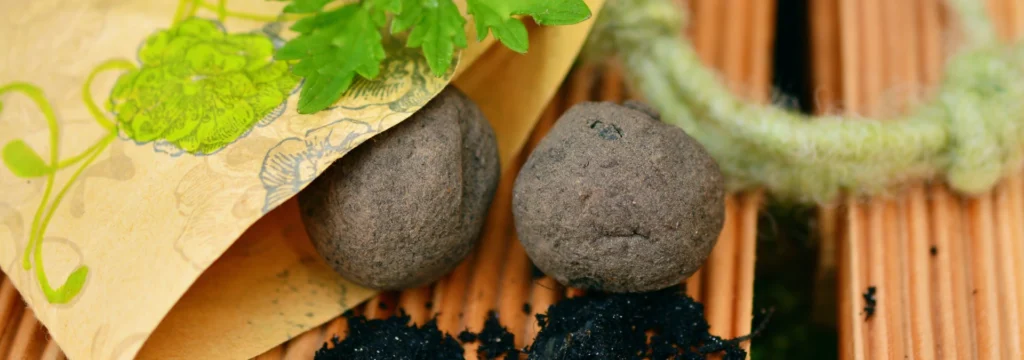
A seed bomb refers to roughly table-tennis-ball-sized spheres of potting soil and clay that are filled with flower and grass seeds. In spring you can throw these onto fallow areas while passing by (Note: areas that belong to no one!) to green them. Or you throw the seed bomb into your garden or, ideally, press the seed bomb slightly into the soil. After the seed bomb has found its place, it still needs plentiful rain or watering. Why? Only then can the seeds contained inside germinate. The soil casing protects the seeds from birds and ants. At the same time it provides nutrients for the seedlings. Additionally, you can place small, heavy seed bombs much farther and more accurately than loose seed grains.
Where does the term seed bomb come from?
The seed bomb is said to have been used first by a Japanese rice farmer. After World War II he devoted himself to nature-oriented gardening and used these clay balls primarily to sow rice and barley. In the seventies western visitors came to his farm and initially took the idea back to America. It became established especially in New York as the so-called „Guerilla Gardening.“ That describes gardening on areas that do not belong to you. Motivations vary. Some practice Guerilla Gardening as a political statement, others out of pure joy in gardening and in greenery and flowering.
How do you make bee-friendly seed bombs yourself?
All you need to make them are seeds (preferably native organic seeds). You will also need clay soil or clay powder and some peat-free potting soil to loosen the clay a little. Fertilizer is unnecessary, as the clay provides sufficient nutrients. Alternatively you can also add some coffee grounds or finely crushed eggshells.
Ingredients list or mixing ratio for the bee-friendly seed bomb
The clay and potting soil are mixed with a little water into a firm dough. Then, with wet hands, form an approximately palm-sized disc, place some seeds in the middle (not too many; 1/2 to 1 teaspoon is sufficient, for larger seeds use a teaspoon) and shape a loose ball. The optimal ratio is therefore approximately 1/2 to 1 teaspoon of seeds, 4 tablespoons of sieved potting soil and 4-5 tablespoons of clay. It is best to let the balls dry in egg cartons for 2 days so they do not fall apart. Then the seed bombs are ready.
Which seeds are suitable for the bee-friendly seed bomb?
Prefer organic seeds of simple, native wildflowers that are suited to the climate and conditions in your city/area. Many nurseries and seed suppliers now offer suitable mixes. Seeds should come from native, bee- or butterfly-friendly plants. Recommended are: lavender, thyme, Tagetes, nasturtium, poppy or calendula. Coneflower and mallows, chamomile or other hardy plants also work well and attract bees, bumblebees and butterflies. You can of course also collect wild seeds, e.g. from dandelion or other wildflowers, and incorporate them into the seed bombs.
Where can the bee-friendly seed bombs be distributed? And where not?
Best are locations that are bare or only sparsely vegetated. Possible areas include derelict roadside verges or the soil around trees or gabions — wire cages filled with stones, often used to separate areas or secure steep slopes. On a lawn, for example, the new seeds have no chance; the rooting is too dense.
What is not allowed?
Taboo are nature reserves, forest areas, private property and agriculturally used land. You are on the safe side if you ask the city administration or the owner of a derelict plot in advance where you are permitted to distribute seed bombs.
Legal regulation since 2020
Since 2020 it has been legally regulated that in Germany only regionally native plant seeds may be sown in public spaces in order to protect the local fauna and flora. Regional plants are much better adapted to the local conditions. The Naturschutzbund and other associations will gladly advise which plants are particularly suitable for a given region and which are better avoided. If you want to distribute seed bombs in your own garden, this legal restriction does not apply, but you still do nature a favor by using native plant seeds.
What else can you do with seed bombs?
If you don’t want to throw the seed bombs yourself, you can, for example, use them to make someone else happy. This is a pleasant, sustainable gift idea: make seed bombs for the balcony or for planters. Packaged in small, painted fabric bags or paper bags, they are great, homemade and above all sustainable gifts. And if you really don’t feel like it or don’t have the time to make the seed bombs yourself, you can also purchase them to give your loved ones a sustainable gift.