
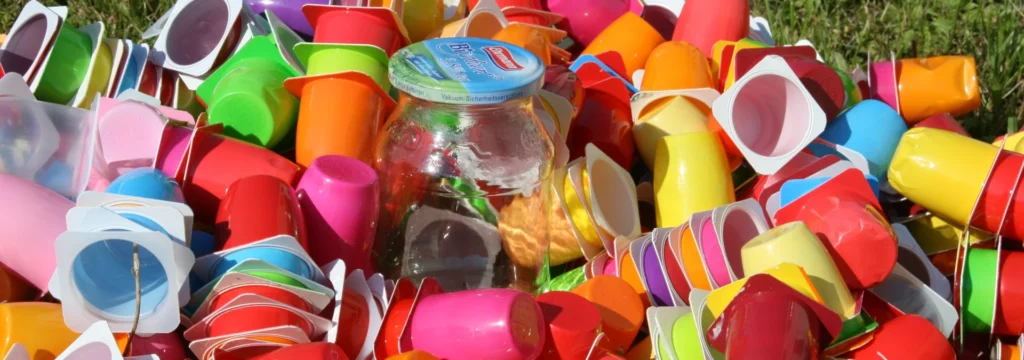
Each of us should feel urged to avoid as much plastic waste as possible. It’s actually quite simple. Every bit of waste avoided contributes to the whole.
How can plastic waste be avoided?
Plastic waste is, as we know, a huge problem. Only small portions can be recycled. The REST is incinerated and pollutes the air. A significant share of plastic bottles is exported to other countries that dispose of it in landfills. Large amounts of plastic waste end up as the „Great Garbage Patch“ in the sea — or as microplastic in our stomachs.
Use cloth bags/jute bags to avoid plastic waste
You can contribute daily to reducing plastic. Jute bags and cloth bags are an excellent alternative because they can be reused. Paper bags for fruit and vegetables also work very well. If there are no paper bags in the supermarket, you can try to express this request to the store manager. Small, persistent efforts make a difference. Use your paper bags multiple times. This also saves further plastic.
Use a shopping basket to avoid plastic waste
Unfortunately, fruit and vegetables are still often sold in thin plastic bags. Take a shopping basket. It has a long service life. Bringing paper bags saves plastic. Apart from that, sturdy plastic bags now cost money. They are intended to be used multiple times. That does not make the situation any better, however. In the end people often forget to take them shopping. And then the next plastic bag is bought.
Avoid plastic coffee capsules
You can easily do without plastic coffee capsules. Did you know that? In 2014 alone, three billion disposed coffee capsules were generated in Germany. These cost six times more than conventionally brewed coffee. With an annual volume of 5.75 billion used plastic coffee capsules, Germany has a responsibility to avoid waste. If everyone takes part, 68.00 tons of plastic waste can be saved.
Prefer fresh vegetables and fruit varieties
You can also avoid frozen vegetables or fruit varieties packaged in plastic. Plastic packaging sometimes contains environmentally harmful plasticizers. There are many reasons why the fruit and vegetable department is located at the entrance area of a supermarket. It occupies only ten percent of the store area. We are supposed to preferentially buy industrially processed food and to refrain from cooking from fresh ingredients. The industry profits twice from that. Farmers, on the other hand, increasingly earn less. It should be noted that in conventional trade, unripe fruit is increasingly artificially ripened afterwards. As a result it spoils faster. It also no longer tastes as good as it used to. Consumers tolerate such practices by buying them. It can help avoid waste to stop buying such items in principle. Because what spoils ends up in the rubbish. At least 63 percent of all fresh goods sold in Germany are packaged in plastic.
If you buy loose fruit and/or vegetables — preferably organic — you ensure that less plastic waste is generated. It is advisable to prefer regional fresh produce at the market. Fruit and vegetables in organic shops are not packaged. They usually come from the region. If you buy locally, you can save a substantial amount of plastic waste.
Facts about plastic waste generated
In 2014, fresh produce alone accounted for 53,500 tonnes of plastic waste and 34,000 tonnes of paper, board and cardboard ending up in German landfills. If you want to avoid waste, you should consciously refrain from buying plastic-packaged goods. The avoidance pays off — because when retailers notice such goods remaining unsold, something changes. As a consumer you can exert influence through your purchasing decisions.
Plastic-free alternatives for cosmetics and cleaning products
If you want to avoid plastic waste you should also consider cleaning products and cosmetics. Awareness of how many plastic bottles, plastic tubs and containers are in circulation in this country should serve as a wake-up moment. However, there are environmentally friendly alternatives.
Shopping at package-free stores to avoid plastic waste
Package-free stores are unfortunately not yet available in every city. There you can buy goods to refill into your own containers, bottles and bags brought along — or buy loose. Reusable glass bottles or other containers can, if necessary, also be purchased there.
DIY cosmetics and cleaning products to avoid plastic waste
You can easily avoid plastic waste by making cosmetics and cleaning products yourself from a few ingredients bought loose, such as baking soda, hard soap, citric acid and washing soda. There is a lot of information about this in books and online forums. The ingredients for such homemade creations are available either in paper bags, glass bottles, reusable metal tins or loose.
Buy solid soaps instead of shower gels or liquid soaps
Solid natural soaps are often wrapped in kraft paper or cardboard. This can replace a large amount of shower gels or liquid soaps packaged in plastic. Did you know that? Each German citizen uses about 787 plastic shampoo bottles per year. This means that 20 to 25 kilograms of plastic waste per person end up in a landfill each year — multiplied by Germany’s population.
If liquid soap, liquid detergents, liquid cleaning products or hair shampoos are indispensable, they should at least be purchased at the refill station in a package-free store and filled into containers you bring. The container weight is tared beforehand and deducted from the price.
Buy bulk and refill packs to reduce plastic waste
Buying bulk packages or a family-size bulk pack makes sense, especially for frequently used products. That already saves a lot of packaging and plastic waste. If, for example, you want to pack a small amount of laundry detergent in your holiday luggage, you can transfer it into a reusable container. Half of all waste could be avoided if purchases were made exclusively according to this principle.
Buy beverages in glass bottles to avoid plastic waste
Buy your beverages in glass bottles. Avoid single-use plastic bottles and cans. Choose reusable/returnable bottles. This helps reduce the environmental burden. Our purchasing decisions always have far-reaching consequences. There is a before and an after. They are often sold where recycling options are lacking. What happens to them locally concerns no one. We should care, because it is our responsibility to prevent it.
There are numerous other tips to avoid plastic waste, such as upcycling worn clothing, using bamboo toothbrushes, renting or borrowing items that are rarely needed instead of buying. Join in. Every small contribution counts.