
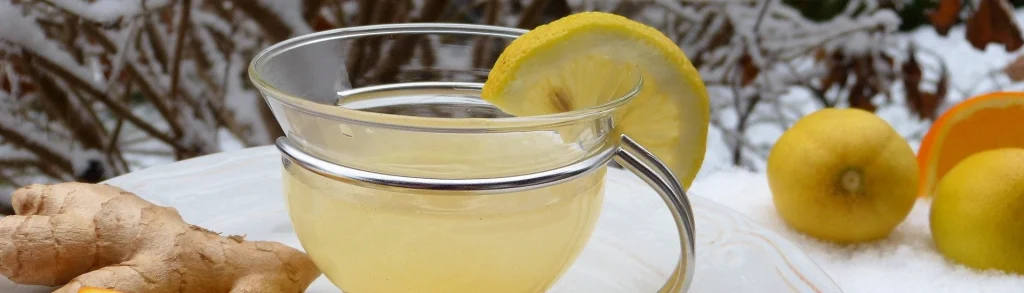
Making delicious ginger tea yourself is very easy. The spicy ginger root has become increasingly popular recently. With it you can create various beverages and dishes. Ginger tea in particular has grown in popularity. Its effects are also very versatile. You can strengthen your own immune system and also combat various pains. The all-round root quickly makes everyday life easier and has become an established home remedy. Which tea creations you can easily make with ginger and what else you should know about the root, you will learn here.
How to make fresh ginger tea yourself
Make sure to always use freshly sliced ginger for the tea. If the root has already been cut, it is no longer as flavorful and loses valuable constituents.
First clean the ginger root with water. Then cut off a thumb-sized piece of the root. That is enough for roughly half a liter of tea. If it is an organic ginger root, the skin may remain. Better remove the skin for non-organic roots.
Then cut the thumb-sized piece into fine, small pieces. The fine pieces ensure a good flavor experience. Those who want a particularly intense flavor can grate the root.
Place the fine pieces in a teapot or a tea infuser. Then pour boiling water over them and let steep. Recommended steeping time: approx. 10–20 minutes. Note the rule of thumb: the longer the tea steeps, the more intense the flavor of the ginger root becomes. However, the tea should steep for at least 5 minutes. You can, of course, sweeten the tea or refine it with a splash of lemon juice. The lemon juice also reduces the spiciness of the ginger root, should the tea have steeped for too long.
Preparing ginger tea: different options
Making fresh ginger tea yourself is only one of three options. There isn’t always time to cut the root into fine pieces and to allow the steeping time. Various ginger powders can help here.
You simply pour boiling water over the powder in a cup and let it steep. It should be noted, however, that the powder will not dissolve completely. If you do not want any particles in your tea, you can sieve the powder beforehand. There are various manufacturers that produce these powders. For occasional drinkers in particular, the powder is a good alternative and also saves the brief preparation effort.
As a final method for preparing ginger tea, there is the variant of making it from ginger juice. For this you also need a thumb-sized piece of ginger root, a lemon or orange, some sugar and a blender. Put the piece of ginger into the blender. Add the peeled orange or lemon with some sugar and one liter of water. Then strain the mixture through a sieve. This produces the fine ginger juice. Fresh ginger juice is particularly suitable if you drink a lot of ginger tea. It is best to pour the ginger juice into a container and store it in the refrigerator. For ginger tea you need about 50 ml of ginger juice. Top this up with hot water.
Important tips for preparing ginger tea
Make sure to avoid the following mistakes when preparing ginger tea. One major mistake, for example, is cutting the root in advance and only boiling the water some time later. Cut the ginger root only when you intend to make the tea immediately afterwards. Only in this way can you ensure that all important ingredients and constituents are absorbed by the body.
You do not have to peel every root. Especially with organic roots the peel contains important vitamins and constituents that the body can additionally take up. Also ensure that you choose the correct water temperature. The water should always be boiling hot and come into immediate contact with the cut or grated ginger. Only in this way can the aroma develop optimally.
Another mistake is letting the ginger tea steep for too short a time. Many are afraid the ginger tea might become too strong. However, the tea should steep for at least five minutes in total to allow the aroma to develop optimally. If necessary, lemon juice can specifically reduce the sharpness.
Make sure you do not consume too much ginger (approx. 50 g). Otherwise, a sensitive stomach can quickly develop discomfort.
Ginger tea recipe ideas
To avoid drinking the same tea all the time, ginger tea can be easily varied with different ingredients.
To create a distinctive herbal blend, for example peppermint, thyme, rosemary, lemon balm and curry herb can be added to the beverage.
Another aromatic variant arises when cinnamon, mint, cardamom and cloves are added to the ginger tea. In this case, note that a cinnamon stick should be used.
Those who prefer oriental teas can also liven up ginger tea with oriental spices. Cardamom and turmeric are added to the ginger tea here.
These benefits the pungent root provides
The ginger root has been used for several years in Chinese medicine and has an anti-inflammatory effect. It acts similarly to aspirin but contains natural constituents. The pungent compounds of the root are primarily gingerols and essential oils. They help stimulate circulation and digestion. Furthermore, the root alleviates various types of pain — whether nausea, menstrual discomfort, headaches, or loss of appetite. The rhizome is a versatile remedy. Ginger has become particularly popular for cold symptoms. Due to its spiciness and the lemon juice that can be added, the root can specifically counteract cold symptoms. The lemon also ensures that it becomes a true vitamin cocktail. With its natural constituents, the ginger root thus broadens the diet.
Conclusion: Making ginger tea yourself
Those who enjoy the ginger root in moderation and do not consume it in excess cannot go wrong with the fresh root. The ginger root is a genuine everyday asset and helps to avoid various medications. In this way it also becomes a true superfood, as it can be used across many everyday applications. It brings many benefits and is a purely natural product.
More recipes can be found here.