
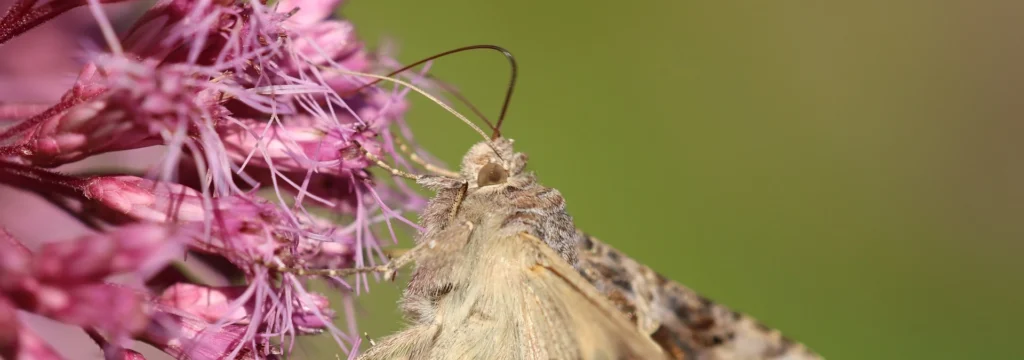
Moths are small, inconspicuous insects considered pests, particularly when they infest clothing or stored goods. Not all moth species are harmful. However, some species can cause significant damage in households. In this text you will learn which types of moths exist, how they live, what damage they cause and how they can be successfully controlled.
1. What are moths?
Moths belong to the insect order of butterflies (Lepidoptera) and include thousands of species worldwide. Most moth species are nocturnal and are attracted to light sources. There are two main types of moths that can become problematic for humans: clothes moths and food moths.
a) Clothes moths
Clothes moths are the best-known pests. They feed on keratin, a protein found in animal fibers such as wool, fur and silk. The moths themselves are not the primary cause of damage — their larvae are. Adult moths lay their eggs on textiles. The larvae then hatch and bore through the fibers of the fabric.
b) Food moths
Food moths primarily infest pantry stocks in the kitchen. They lay their eggs on dry foods such as cereals, nuts, flour, rice and dried fruit. The hatched larvae feed on the foodstuffs, which leads to significant contamination and economic loss.
2. Life cycle of moths
The life cycle of a moth comprises four stages: egg, larva, pupa and adult insect. The female lays her eggs near the larval food sources. After a few days the larvae hatch and begin feeding immediately. This is the phase in which most of the damage is caused.
The larvae grow for several weeks and then pupate. Pupation typically lasts about two weeks. Adult moths then emerge and live only a few days to weeks. During this phase they no longer feed — their sole objective is reproduction.
3. Damage caused by moths
Moths can cause considerable damage in households, particularly to clothing and stored food. The larvae of clothes moths eat through garments and other textiles. The moths leave holes and destroy fabrics that cannot be repaired. Items made of wool, fur or silk are especially at risk, but carpets and upholstery can also be affected.
Food moths, by contrast, infest food supplies. The larvae leave webbing, feces and dead moths in the food. The economic damage in a household can be substantial, as entire stocks often have to be discarded.
4. Prevention and Control of Moths
Preventing a moth infestation is the best protection. Here are some measures that can help keep moths away:
a) Preventing Clothes Moths
- Regular airing and cleaning: Air your wardrobes and clean your clothes regularly. Note: Particularly worn garments should be washed before being returned to the wardrobe.
- Lavender and cedarwood: The scent of lavender and cedarwood repels moths. You can place lavender sachets or pieces of cedarwood in your wardrobe to keep clothes moths away.
- Storage in sealed containers: Clothing that will not be worn for an extended period should be stored in airtight containers. This prevents moths from laying eggs on the fabrics.
b) Preventing Pantry Moths
- Store food in airtight containers: Keep dry foods such as flour, nuts and rice in sealed containers to deter pantry moths.
- Regular checks: Inspect your supplies regularly for signs of moth infestation, such as webbing or small larvae.
- Kitchen cleanliness: Maintain cleanliness in the kitchen. Crumbs and food residues should be removed regularly to avoid attracting moths.
5. Combating a Moth Infestation
If a moth infestation occurs, it is important to act quickly. Here are some measures for eradication:
a) Combating Clothes Moths
- Washing and airing out: Infested garments should be washed at high temperatures to kill eggs and larvae. Alternatively, textiles can be frozen for several days to eliminate the pests.
- Moth traps: There are specialized moth traps for clothes moths, e.g. from the company ARIES, that attract male moths and thereby interrupt reproduction.
- Pest control professionals: In the case of a severe infestation, it may be necessary to call in professional pest control services to resolve the problem.
b) Combating Pantry Moths
- Dispose of infested food: Contaminated food should be discarded immediately. Ensure all pantry items are inspected thoroughly.
- Cleaning the cabinets: Cabinets should be cleaned thoroughly and all corners and crevices vacuumed to remove eggs and larvae.
- Moth traps: Pheromone traps can help capture adult moths and reduce population levels.
Conclusion
Moths are small insects but can cause significant damage, particularly in households. Clothes moths destroy textiles, while pantry moths contaminate food stores. Preventive measures such as regular cleaning, airtight storage and natural deterrents are effective at keeping moths at bay. In the event of an infestation, prompt action is essential to control the pests and prevent further damage.