
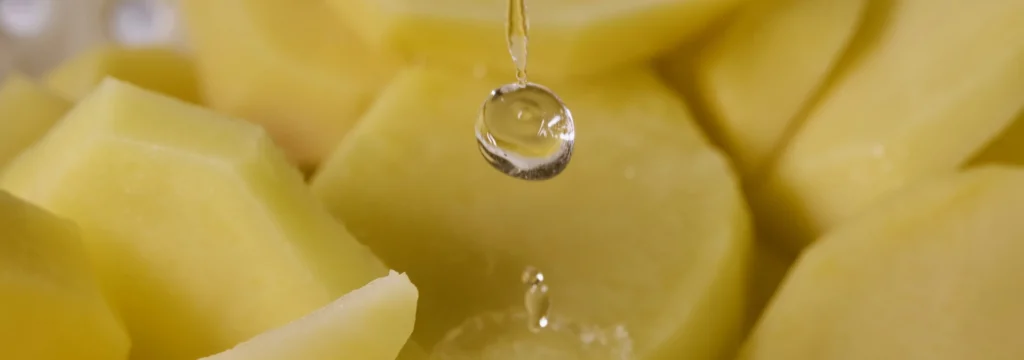
The power of potato water
The potato is a very popular vegetable in Germany. No other EU country cultivates as many potatoes. Potatoes are healthy, tasty and versatile. When you cook vegetables like carrots, potatoes, broccoli etc. in plenty of water, many valuable nutrients end up in the cooking water. It is sensible to reuse the vegetable water for sauces or soups. The same applies to potato water. Potato water also contains minerals such as phosphorus, magnesium, iron and potassium that have passed from the potato into the cooking water.
What is solanine?
You sometimes encounter doubts about potatoes because of their content of solanine. Solanine is a mildly toxic alkaloid. In fact, potato tubers, like unripe green tomatoes, contain a more or less high amount of solanine. Solanine accumulates mainly in the potato skin and in green spots. The deeper you go into the potato, the less solanine is present.
Higher amounts of solanine can cause poisoning symptoms such as diarrhea, vomiting, sore throat or shortness of breath. To ingest a dangerous amount of around 25 milligrams of toxic solanine, you would have to eat approximately 800 to 900 grams of potatoes with the skin. Therefore choose your potatoes carefully. When potatoes are boiled, a broth forms that contains only a minimal amount of solanine. However, solanine is not destroyed by cooking.
Note: If you make sure before use that your potatoes have no green spots and have not yet started to sprout, you are on the safe side. Larger potatoes are preferable because of the surface-to-tuber ratio.
Reuse potato water instead of discarding it – upcycle potato broth
The broth produced when boiling potatoes, i.e. potato water, is an incredibly versatile all-rounder. What can you do with it? There is a wide range of possible uses. Please note: potatoes prepared under the common term Salzkartoffeln should not be cooked with added salt. The salt then contained in the potato broth would be counterproductive.
If you boil Pellkartoffeln, you cannot use the cooking water, because the solanine present in the cooked potato skins will then be found in the water. Whether in the kitchen when cooking and baking, for cleaning around the house or in the garden: potato water, also called potato broth, contains starch in both senses of the word. It not only helps you save, but is an excellent all-rounder. So: reuse potato water instead of discarding it!
What potato water can do
Potato water – a healthy ingredient for cooking
You can use potato water when cooking for sauces or soups. Potato water enhances sauces and soups through its beneficial compounds. It also acts as a binder and gives them a more intense flavor.
Potato water – savory ingredient for baking
If you bake your own bread, you can replace the specified liquid with potato water. Your bread will develop a slightly heartier flavor with potato notes. By the way: potato water can be stored in the refrigerator for at least three days.
Potato water – when washing dishes by hand
If you wash by hand, you can use the potato water practically directly as dish detergent. Did you know that? Potato water even has a caring effect on your hands. What to do if your pans are encrusted? Potato water is an all‑rounder. Soak the pan in potato water. The starch present in the water acts as a degreaser. Hinweis:
Das Geschirr und die Töpfe sollten abschließend mit klarem, warmem Wasser nachgespült werden.
Potato water – cleaning aid
Potato water is also versatile when cleaning. Gently rub your fixtures with a sponge and potato water and then rinse with clear water so no starch residues remain. A clogged drain does not have to be cleared with high‑grade chemicals. Hot potato water helps here. Deposited dirt is dissolved by the starch.
Potato water – for removing stains
Stubborn stains on textiles from red wine, grease or blood can be removed more easily if you soak them in potato water before actual washing. For blood stains, adding salt increases the effect.
Potato water – use in the garden
Against weeds
If weeds bother you in your garden, you can use potato water as a weed killer. Here you must use hot potato water. The above‑ground plant parts are destroyed; the roots must be removed later. If you have to eliminate ground elder (Giersch), which is actually useful and healthy but overruns the garden, at least you gain some relief at the surface.
Against aphids
Aphids are a real nuisance in some flower beds. Applying cold potato water with a spray bottle to the flowers and leaves of the affected plants provides relief.
Fertilizer
Cooled potato water can be used as a natural fertilizer. The minerals it contains, such as iron, phosphorus and magnesium, support plants in their growth and flowering. Applied close to the root with a watering can directly into the soil, the minerals are available to the plants with the water. Pay special attention to ensuring the potato water contains no salt. That would harm the plants.
Potato water for a nervous stomach
As a gentle remedy, potato water is effective if you suffer from a nervous or irritated stomach. Peel generously two medium-sized potatoes, dice them and cook with two teaspoons of caraway and a little salt in two liters of water for about 20 minutes. The potato water is then strained through a small sieve and consumed over the course of two days. The regimen should be followed for four to six weeks.
Potato water for the skin
For a rash with itching, potato water without added salt provides relief. Once cooled, you can moisten the affected skin areas with it. You can also occasionally give your hands a bath in the potato water. The starch present in the water helps particularly rough or even cracked skin absorb moisture more effectively. For a good result, you should then let your hands air-dry so that the beneficial starch can remain on them.
CONCLUSION
Even as a drink, potato water can be applied in many ways. With the trace elements iron, magnesium, potassium, calcium, the dietary fiber and the starch contained in potato water, it helps counteract muscle tension, the often annoying muscle twitching, cramps or inner RESTlessness.
With its high starch content, potato water contributes to strengthening hair and scalp. If you apply potato water to the lengths and ends of your hair and leave it on for a short time, after rinsing you can expect shinier and more vibrant-looking hair.
As you can see, you should no longer pour potato water away. It is a true all-rounder: whether for the household, the garden or your personal beauty care.