
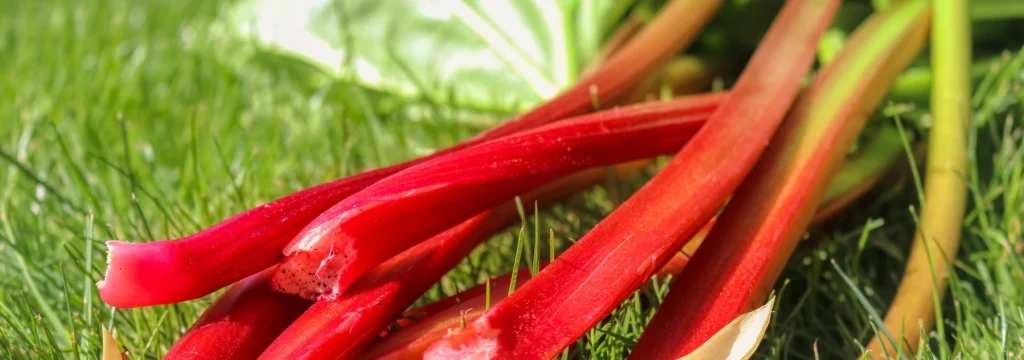
Rhubarb is among the most popular ingredients in German cuisine. Its fruity-tart flavor makes it an ideal ingredient for cakes, compote, jam or even savory dishes. Although it is most often used like a fruit, botanically it is a vegetable — more precisely: a member of the knotweed family.
Rhubarb – Origin and History
Originally the vegetable comes from the Himalayas and was already used in China as a medicinal plant more than 5,000 years ago. Via trade routes it reached Russia and finally Europe in the 18th century. Initially used only as a remedy, rhubarb soon established itself in the kitchen as well — especially in German-speaking regions.
Rhubarb – When is the harvest season?
The season begins, depending on the weather, in mid to late April and traditionally ends on June 24, St. John’s Day. This date has two reasons: on the one hand the plant needs a rest period after the harvest to regenerate. On the other hand the oxalic acid content in the stalks increases as the year progresses. Too much of it can be harmful in large quantities — therefore it should really be consumed only in season.
The most popular rhubarb varieties
There are numerous varieties with different flavor profiles and colors. They can be roughly divided into three categories:
1. Red rhubarb
Examples: Holsteiner Blut, Frambozen Rood
These varieties have red skins and red flesh. They are milder in flavor and contain less oxalic acid.
2. Green rhubarb
Examples: Goliath, The Sutton
They have green stalks and a very intense, tart aroma. Ideal for compote and savory dishes.
3. Mixed varieties
Examples: Canada Red
These varieties combine reddish skin with greenish flesh and offer a balanced acid-sweet profile.
Rhubarb — healthy and low in calories
The vegetable is over 90 percent water and is therefore extremely low in calories — only around 20 kcal per 100 grams. At the same time it is packed with valuable nutrients:
- Vitamin C to strengthen the immune system
- Potassium and calcium for metabolism and bone health
- Antioxidants such as polyphenols
- Dietary fiber for healthy digestion
However, due to its oxalic acid content, calcium absorption can be somewhat impaired – therefore it is recommended to combine rhubarb with calcium-rich foods such as dairy products.
Growing rhubarb in the garden
The plant is a hardy, winter-tolerant perennial and, with proper care, will grow for many years in the same location. The ideal site is sunny to partially shaded with humus-rich, slightly moist soil.
Tips for cultivation:
- Planting time: spring or autumn
- Plant spacing: at least 80 x 100 cm
- Prepare the soil well and enrich with compost
- From the 2nd or 3rd year it can be harvested regularly
- Harvest by carefully twisting out the stalks – never cut them
Do not harvest after June 24 to avoid weakening the plant.
Properly storing and preserving rhubarb
Freshly harvested, it will keep in the refrigerator (wrapped in a damp cloth) for about 2–3 days. Alternatively, it can be frozen raw in pieces or preserved by canning.
Popular preservation methods:
- Cook rhubarb compote
- Rhubarb-strawberry jam
- Rhubarb syrup for beverages
- Rhubarb chutney for savory dishes
This allows the taste of spring to be enjoyed beyond the summer months.
Preparing rhubarb – tips and tricks
It should be peeled before consumption, as most oxalic acid is in the skin. Cooking also significantly reduces the acidity. Using sugar, vanilla or sweet fruits (e.g., strawberries or apples) will temper the acidity.
Basic rhubarb compote recipe:
- 500 g rhubarb, peeled and cut into pieces
- 100 g sugar (to taste)
- 1/2 vanilla pod or some vanilla sugar
- Optional: add strawberries, cinnamon or ginger
- Simmer everything over medium heat for 10–15 minutes
Rhubarb ideas for every occasion
Rhubarb can be prepared both sweet and savory. Here are some ideas:
Sweet rhubarb recipes:
- Rhubarb cake with meringue
- Rhubarb streusel cake
- Rhubarb tiramisu
- Rhubarb yogurt dessert
- Rhubarb sorbet or ice cream
Savory ideas:
- Rhubarb chutney with cheese or meat
- Rhubarb as a fruity note in curries
- Rhubarb red cabbage as a refined side dish
Vegan alternatives, such as rhubarb crumble made with plant-based fat and date syrup, are also very popular.
Sustainable enjoyment: buying locally
Rhubarb is grown regionally in Germany and does not require long transport routes. Buying it at the market or directly from the farmer during the season saves CO₂ and supports local businesses. It is also relatively easy to cultivate and, compared with other fruit varieties, requires less water.
Conclusion: Rhubarb
Rhubarb is not only a classic in the kitchen but also a symbol of seasonal enjoyment. It is low in calories, healthy, easy to work with and versatile in use — from sweet to savory. Those who focus on regional and seasonal eating will hardly avoid rhubarb in spring. Whether in the garden, in the field or on the plate — rhubarb brings spring back and convinces with its flavor.